Mechanisms of stress tolerance in insects
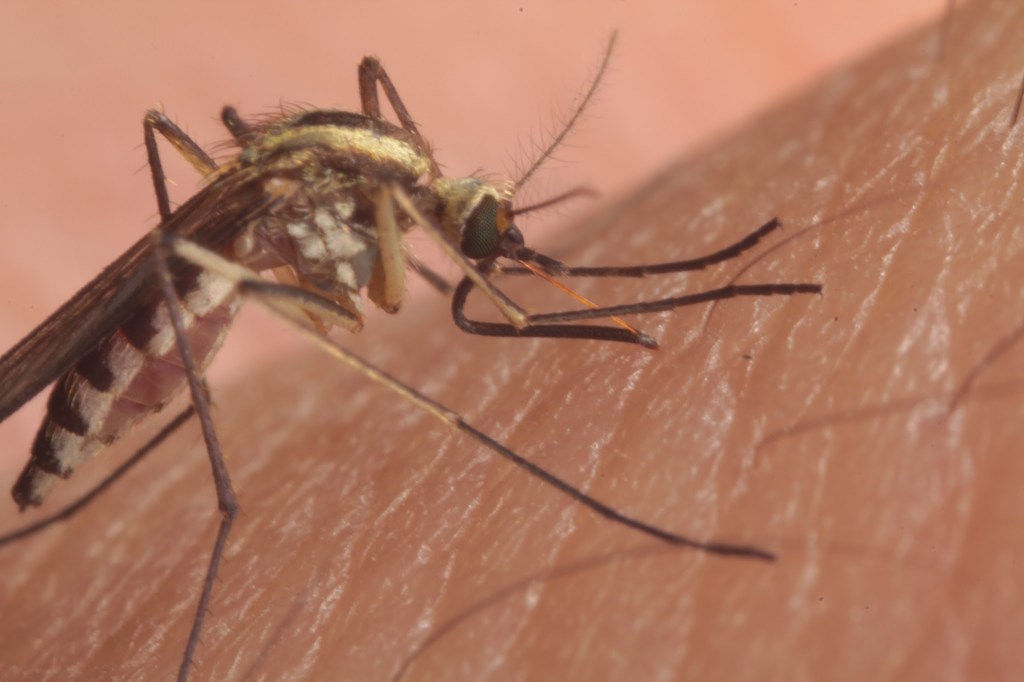
The ability of an organism to tolerate and respond to stress is critical in the establishment and persistence of this individual within specific localities. The objectives of this research are to identify mechanisms utilized at multiple biological levels (molecular to population) by insects to prevent and recover from damage due to stress. Projects investigating these responses range from direct measurement of insect stress tolerance (i.e. cold or dehydration tolerance) to functional genomics and metabolomic analyses. In addition, when possible, field studies will be integrated into these projects to assess if mechanisms identified in laboratory population can be confirmed in natural populations. Individuals working on these projects will have background knowledge of the molecular and cellular mechanisms utilized when insects are exposed stressful periods and techniques necessary to investigate these mechanisms by laboratory- or field-based studies.
Example articles
Viviparous reproduction of insects
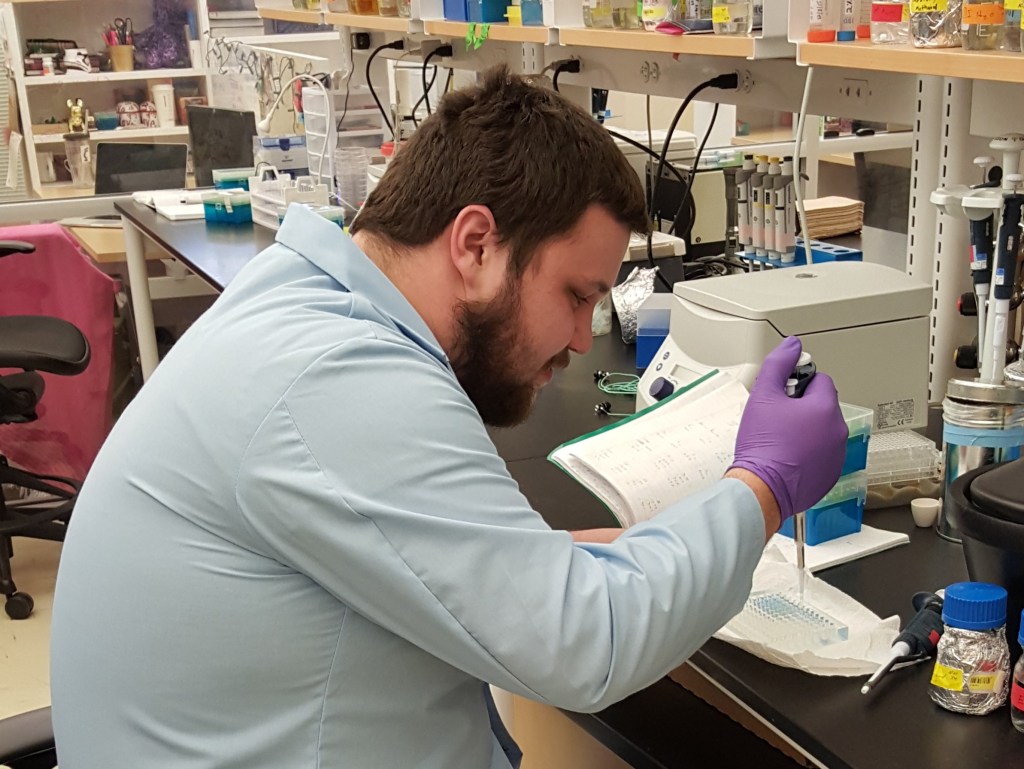
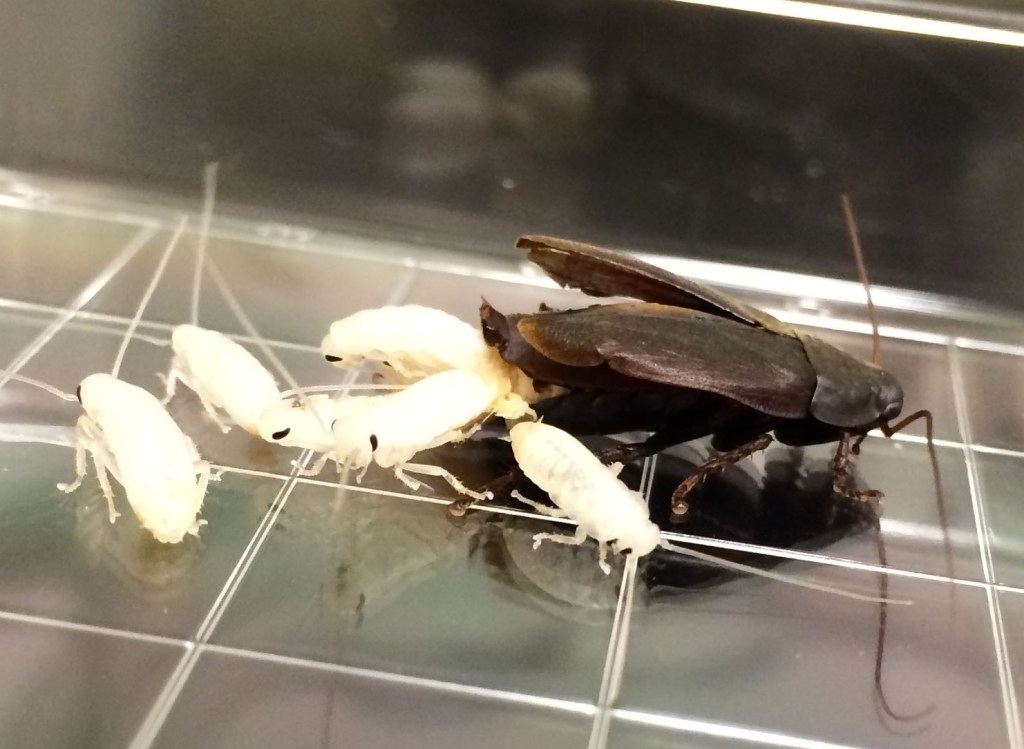
Previous studies have assessed the physiological aspects of live birth reproduction for invertebrates, but little was known about the molecular aspects. These studies identified the underlying mechanisms of viviparous reproduction including the gene expression changes during tsetse lactation and the role of specific proteins in relation to milk homeostasis. The studies identified novel tsetse-specific abortifacients that could be used in vector control protocols. This research culminated with a review in the Annual Review of Entomology and has expanded into live birth studies in cockroaches.
Example articles
tRNA and their modifications in blood feeding arthropods
Protein alterations are essential for the physiological functions of blood-feeding arthropods. To support this, transfer RNA (tRNA) abundance and chemical modifications are critical for efficient protein synthesis. This review highlights the role of tRNA regulation in blood-feeding systems. Notably, these modifications are influenced by host-microbe interactions, as they depend on micronutrients sourced from both symbiotic organisms and the arthropod’s diet. Furthermore, tRNA modifications are likely involved in the molecular interplay between vectors and pathogens, potentially affecting pathogen transmission to vertebrate hosts. Overall, tRNA levels and their modifications may play pivotal roles in the complex mosquito–microbiome–pathogen relationship, representing a promising target for disrupting disease transmission.
Example articles

Sleep processes in blood feeding arthropods
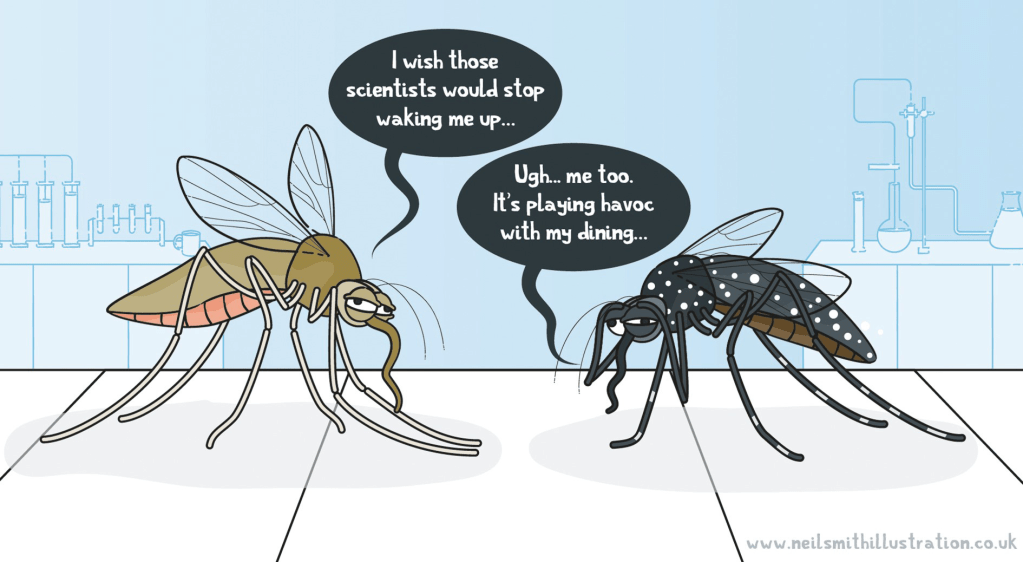
Mosquitoes, like many other insects, have sleep-like states, although quite different from that of mammals. Rather than entering a deep, unconscious state, mosquitoes become less active and exhibit lowered responsiveness to stimuli during rest periods. These resting phases typically occur during the daytime for nocturnal species and at night for diurnal ones. Research shows that mosquitoes adopt a characteristic resting posture, often lowering their bodies and antennae, which suggests a regulated sleep-like state. Sleep in mosquitoes is essential for maintaining their biological functions, including feeding and reproduction.
Example papers
 Laboratory of Insect Biology at the University of Cincinnati